Economic Expectation Index by the Istanbul Chamber of Certified Public Accountants and Istanbul Ticaret University: Cautious Outlook Came to the Fore in the Second Quarter of 2025
![]()
The Economic Expectation Index for the second quarter of 2025, prepared by our Faculty of Business Administration academics Prof. Dr. Nazım Ekren, Prof. Dr. Elçin Aykaç Alp, and Dr. Mefule Fındıkçı Erdoğan in collaboration with the Istanbul Chamber of Certified Public Accountants (İYMMO), the Academy for Thought and Project Development at Istanbul Ticaret University, and the Center for Economic and Financial Applications and Research, was shared with the public.
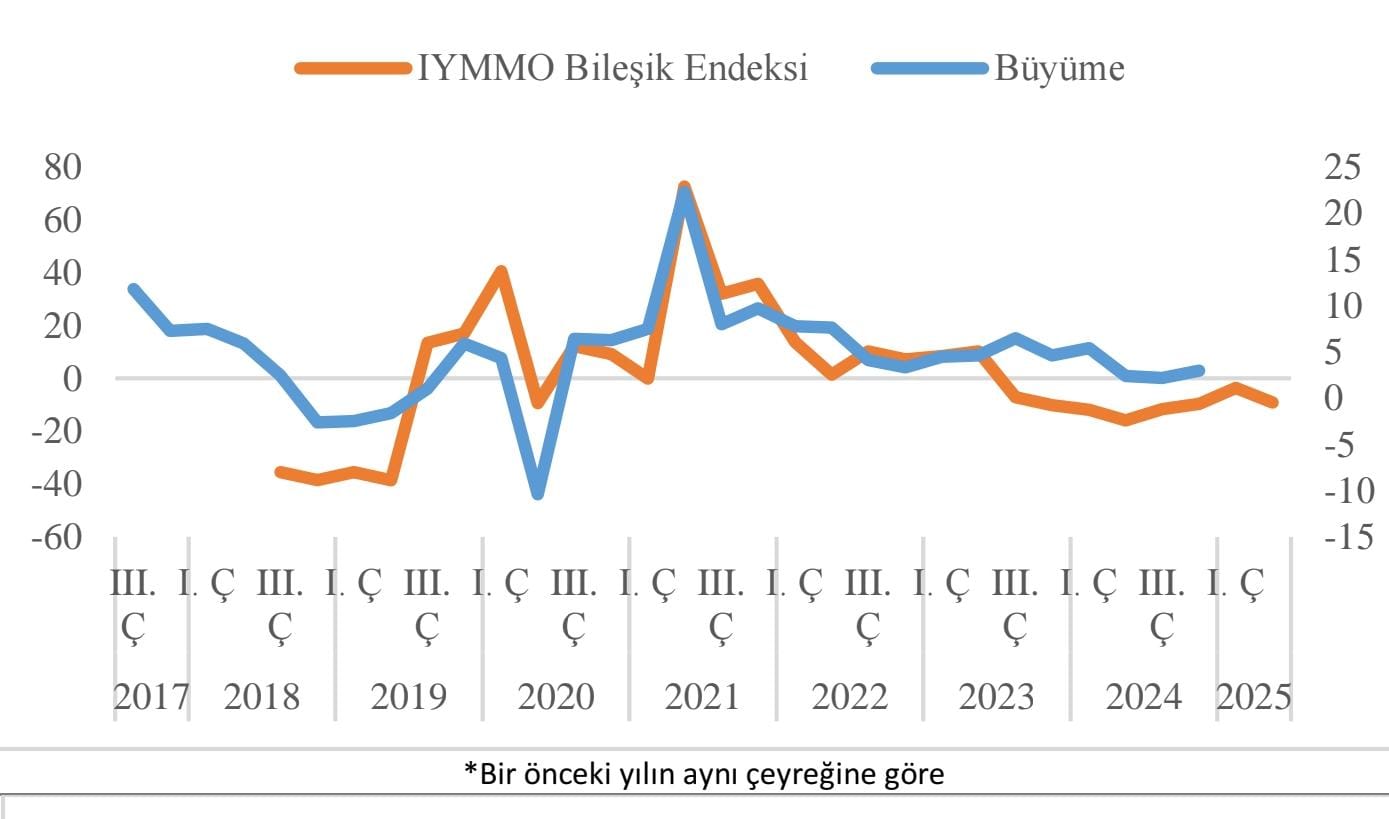
The composite index, calculated based on the survey responses, stood at 49.8.
The index remaining below the threshold value of 50 revealed that the expectation that “economic activity will continue at a reasonable level” in the first quarter gave way to a more cautious and weaker outlook in the second quarter.
Declining Expectations, Divergence Across Firm Sizes
According to the survey data, firm expectations differed in terms of both turnover and number of employees:
- Index values by turnover:
- Small-sized firms: 42.9
- Medium-sized firms: 49.9
- Large-sized firms: 51.3
- By number of employees:
- Small firms: 49.8
- Medium-sized firms: 50.6
- Large firms: 48.9
While the “cautious optimism” observed in the first quarter was replaced by “general caution” in the second quarter, this decline in expectations was felt more significantly, particularly among small-sized firms.
Sectoral Analysis: Healthcare, Food, and Tourism Showed a Positive Divergence
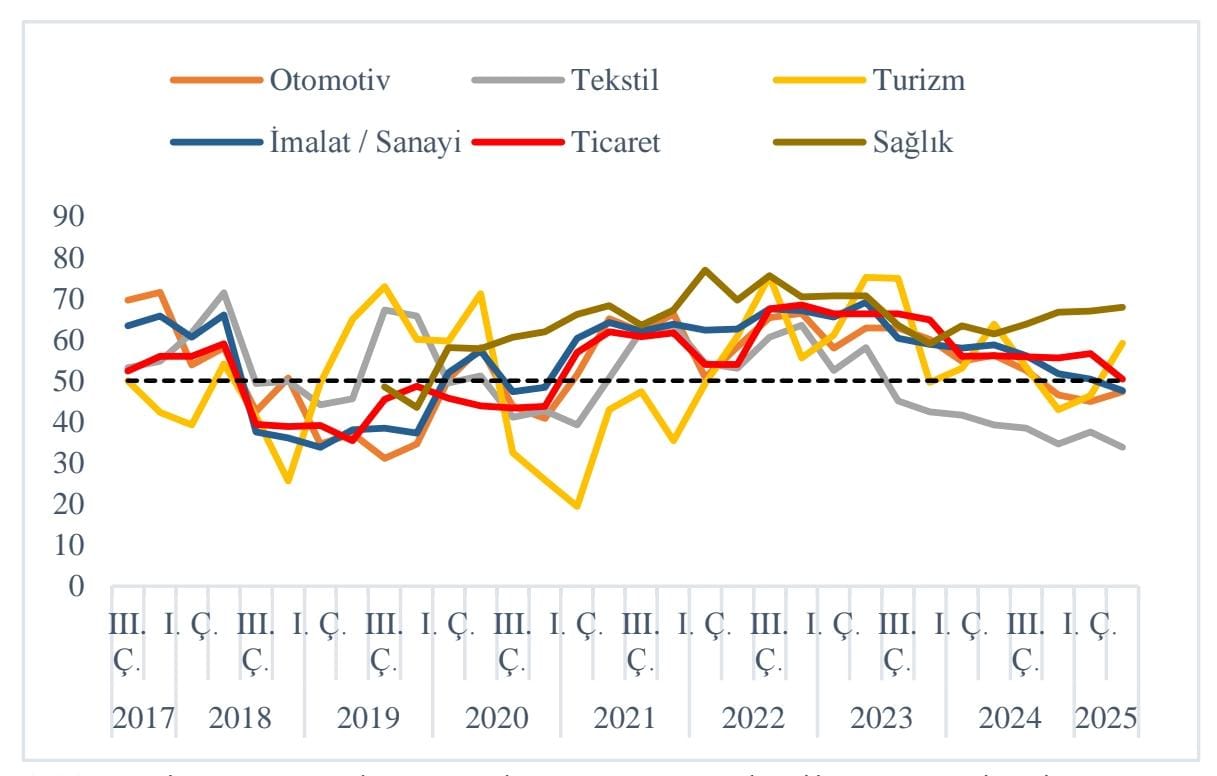
According to the index data, in the second quarter of 2025, expectations were above 50 points in all sectors except textiles, automotive, construction, and manufacturing/industry. The best-performing sectors, in order, were:
- Healthcare
- Food/Agriculture
- Tourism
The healthcare sector demonstrated a strong and stable outlook thanks to its increased strategic importance following the pandemic, while the food/agriculture sectors stood out due to supply chain security and tourism due to the recovery in domestic and international demand.
In contrast, the textile sector received the lowest score in the expectation index due to rising costs, declining external demand, and low investment appetite.
Macroeconomic Risks: Inflation, Exchange Rates, and Cost Pressures
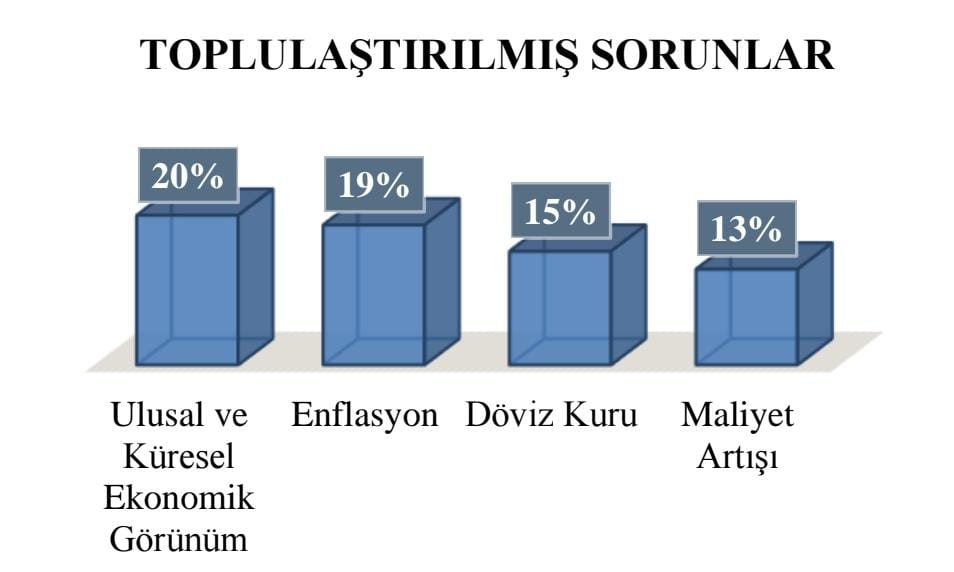
The most common problems faced by firms in the second quarter were listed as follows:
- National and global outlook
- Inflation
- Exchange rates
- Cost increases in areas such as energy, labor, and logistics
- Difficulties in accessing finance
Exporting firms, in particular, stated that the exchange rate remaining low relative to inflation weakened their competitiveness and led to sales at a loss. Firms are calling for a competitive and predictable exchange rate policy.
Policy Recommendations from Certified Public Accountants
The participants’ proposed solutions contain important messages for economic management:
- Re-establishing economic predictability
- Simplifying tax legislation and ensuring the fair distribution of incentives
- Structural measures to combat inflation without suppressing production
- Establishing a balance between exchange rates and inflation and increasing Eximbank support
- Measures to reduce energy and labor costs
Production-oriented sectors, particularly industry and agriculture, are emphasizing more strongly the need for these structural solutions.
The Manufacturing/Industry Sector Is Sounding the Alarm
According to the index data, the manufacturing and industry sector experienced a notable decline in the second quarter. The decline in expectations in this sector is associated with numerous problems, such as high inflation, exchange rate volatility, rising costs, and weakening external demand. As one of the driving forces of the Turkish economy, the manufacturing/industry sector is directly affected by exchange rate fluctuations due to the high dependence of its production processes on imported intermediate goods and energy. At the same time, rising input costs caused by high inflation weaken the sustainability of its production structure. The global economic outlook and geopolitical developments also put pressure on external demand, negatively affecting the sector’s export performance. All these factors place the manufacturing/industry sector at the intersection of economic challenges originating from both domestic and external sources.
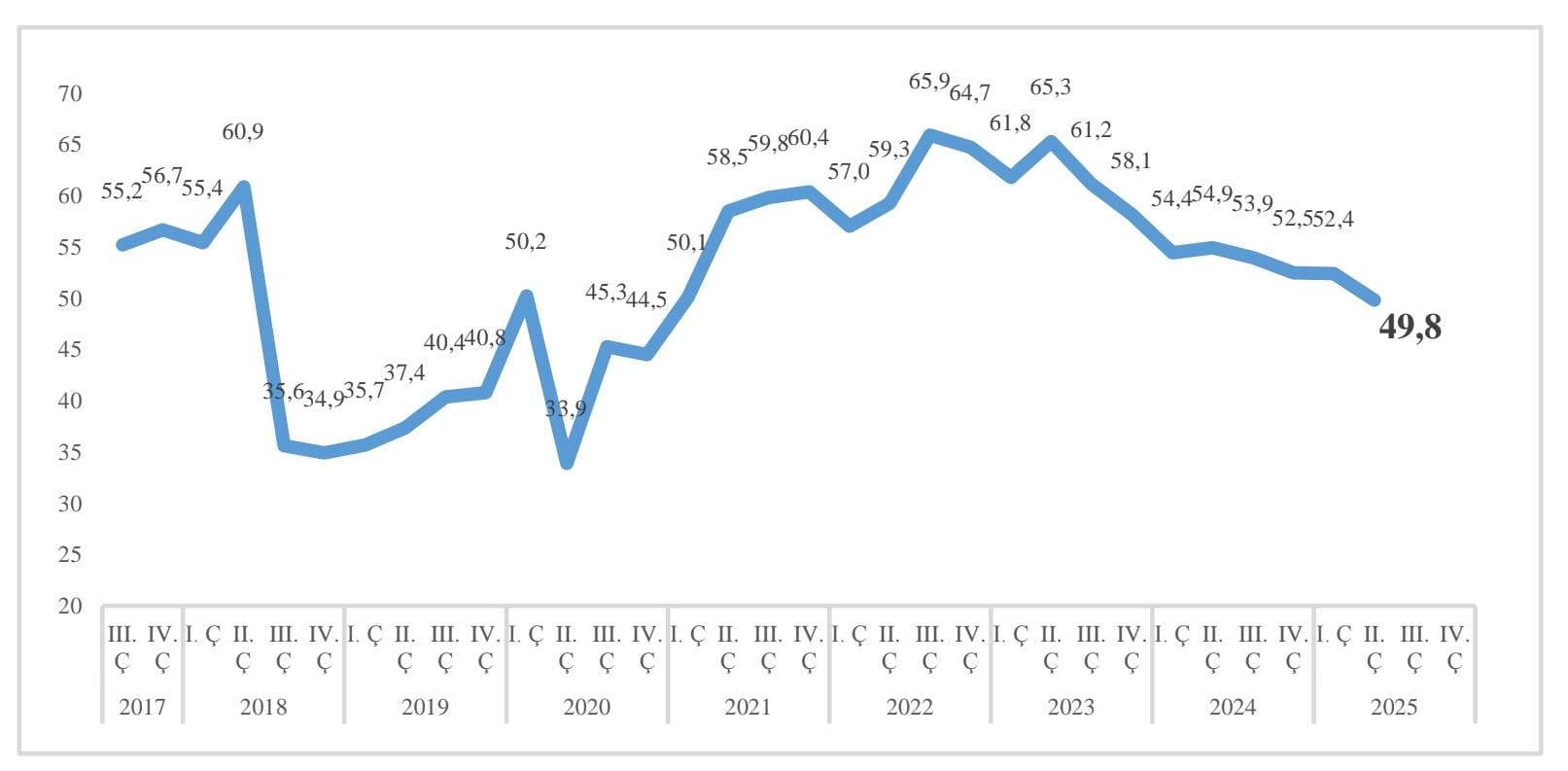
Economic Expectation Index, Second Quarter of 2025
The second-quarter 2025 results of the Economic Expectation Index, implemented in collaboration with the Istanbul Chamber of Certified Public Accountants and the Academy for Thought and Project Development at Istanbul Ticaret University and the Center for Economic and Financial Applications and Research, were covered by prominent figures in economics, Abdurrahman Yıldırım, Vahap Munyar, and Servet Yıldırım.
Abdurrahman Yıldırım: Three Developments That Balanced the Double Shock
Vahap Munyar: The Pulse of 25,000 Companies in Istanbul Has Shifted to “Weak and Cautious”
Servet Yıldırım: Have We Been Caught Off Guard Again?