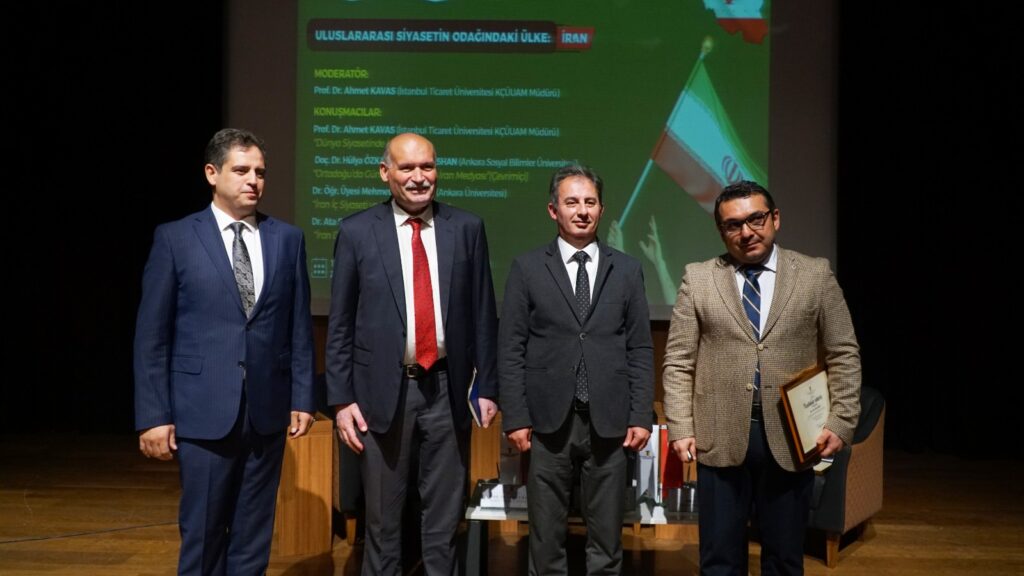
Iran’s Political and Foreign Policy Dynamics were Discussed
![]()
In the panel titled “The Country in Focus of International Politics: Iran”, Iran’s domestic politics, ethnic structure and foreign policy strategies were discussed in detail.
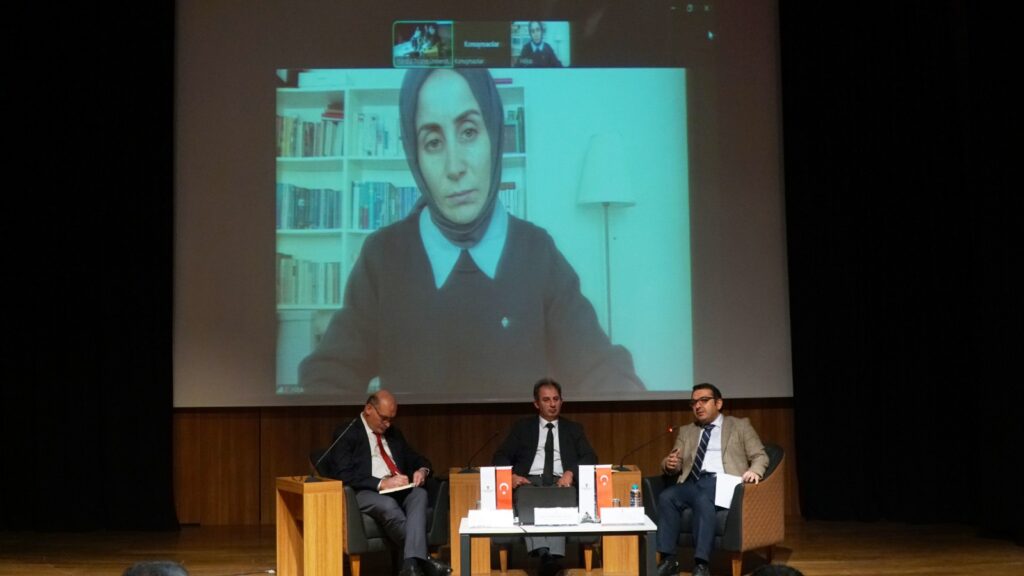
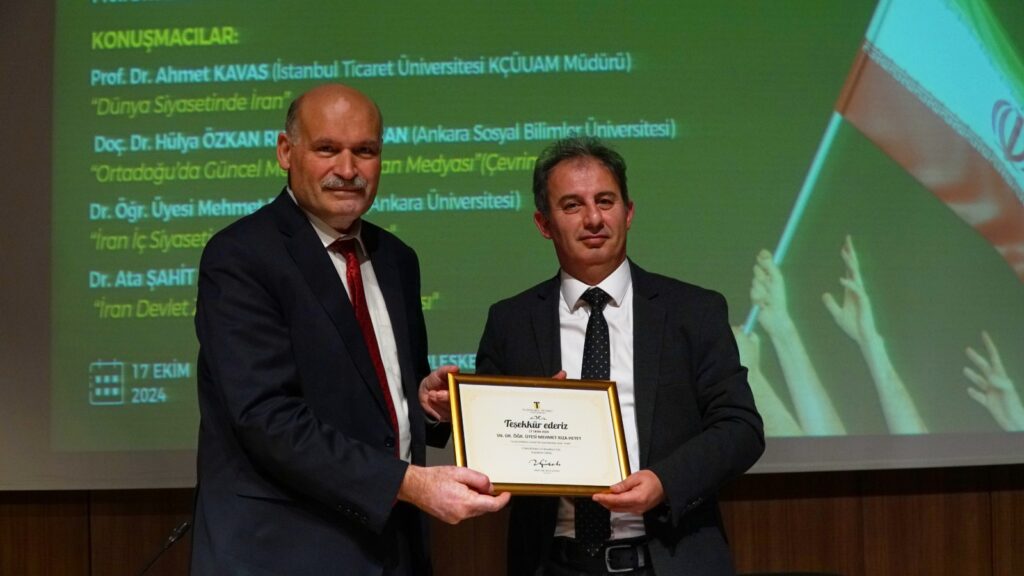
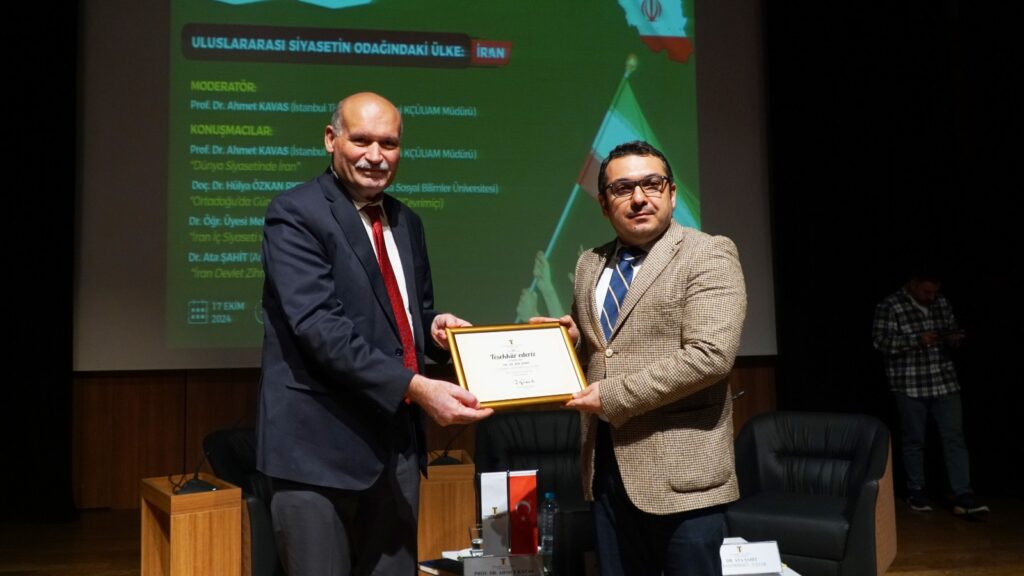
The panel titled “The Country in Focus of International Politics: Iran” was held in the Conference Hall of our University’s Sütlüce Campus. In the panel moderated by Prof. Dr. Ahmet Kavas, a member of the faculty at the Department of Political Science and International Relations and the Director of Neighboring and Surrounding Countries Application and Research Center, Assoc. Prof. Dr. Hülya Özkan Rigiderakhshan from Ankara Social Sciences University, faculty member Dr. Mehmet Rıza Heyet from Ankara University and Researcher and Author Dr. Ata Şahit took part as speakers. Academicians and students from our university and a number of institutions participated in the panel.
ASSESSMENTS ON THE MIDDLE EAST AND IRANIAN MEDIA
Assoc. Prof. Dr. Hülya Özkan Rigiderakhshan, who delivered the first speech of the panel online, touched upon the historical background of Iran-Israel relations. Assoc. Prof. Dr. Özkan emphasized that Iran positioned Israel as an “other” in its foreign policy after the 1979 Revolution and waged indirect wars against Israel by establishing various militia forces in order to overcome its regional loneliness after the revolution.
IRAN-ISRAEL RELATIONS AND REFORM PROCESSES
Assoc. Prof. Dr. Özkan discussed the different views of reformers in Iran and intellectuals in the diaspora regarding the conflict with Israel. Arguing that these groups should follow an approach that prioritizes Iran’s national interests and moves away from ideological foreign policies, Assoc. Prof. Dr. Özkan also said that the Arab world does not see Iran as a model and that Iran’s policy of exporting revolution creates a threat perception in Arab governments.
IRANIAN SOCIETY’S PERCEPTION OF ISRAEL
Discussing the policies of conservative and radical groups in Iran towards Israel, Assoc. Prof. Dr. Özkan stated that these groups see Israel as a proxy of imperialist powers. Assoc. Prof. Dr. Özkan stated that Iran’s efforts to strengthen its military capabilities are presented by these groups as a deterrent force against Israel, and the media supports this narrative.
MASSOUD PEZESHKIYAN AND IRAN’S DOMESTIC POLITICS
Faculty member Dr. Mehmet Rıza Heyet evaluated Iran’s political structure and ethnic dynamics. Dr. Heyet stated that Persian nationalism and Shiism have been the fundamental elements of the state in Iran since 1925. Stating that Pezeshkiyan’s election as President is a source of hope for those who want reform, Dr. Heyet emphasized that the tensions between ethnic groups in Iran can be reduced with the steps Pezeshkiyan will take. However, Dr. Heyet noted that the impact of these reforms could be limited due to the limited authority of the Presidency.
IRAN’S STRATEGY IN ITS RELATIONS WITH AZERBAIJAN AND TÜRKİYE
Faculty member Dr. Heyet also touched on Iran’s foreign policy strategies, particularly towards Azerbaijan and Türkiye. Stating that Iran continues its policy of supporting Armenia and its oppressive stance towards Azerbaijan, where the Turkish population is concentrated, Dr. Heyet emphasized that the democratic demands of the Turkish population in Iran are being tried to be suppressed in line with Persian nationalism.
BASIC DYNAMICS OF IRANIAN STATE MENTALITY
Researcher and author Dr. Ata Şahit evaluated Iran’s state mentality and foreign policy strategies. Dr. Şahit said that the absolute authority of the jurist (velayati-fakih) interpretation of Shiite jurisprudence and Persian nationalism are decisive in Iran’s foreign policy decisions, and emphasized that these elements were one of the most important building blocks of Iran’s Islamic Republic period.
PERSIAN NATIONALISM AND FOREIGN POLICY STRATEGY
Dr. Şahit stated that the ideology of Persian nationalism is not limited to secular segments in Iran, but is also influential in conservative and radical groups. Additionally, Dr. Şahit drew attention to the repercussions of Iran’s effort to position itself as the protector of Islam in foreign policy, especially in its relations with Azerbaijan and Türkiye.
GEOPOLITICAL AND IDEOLOGICAL BALANCES IN IRAN’S FOREIGN POLICY
Dr. Şahit said that Iran’s foreign policy can be seen as complex and inconsistent at times, adding: “Iran is trying to balance both ideological and geopolitical interests. The country is following a strategy of being ready to compromise and fight. Iran positions itself not only as a regional power but also as the leader of the Islamic world.”