The Generation Z Report featuring interviews with 1000 young people
![]()
The “Getting to Know the Z Generation: Values, Preferences, Opinions” Report, prepared by Istanbul Ticaret University by interviewing 1000 young people between the ages of 19 and 25 from different socioeconomic backgrounds was shared with the public.
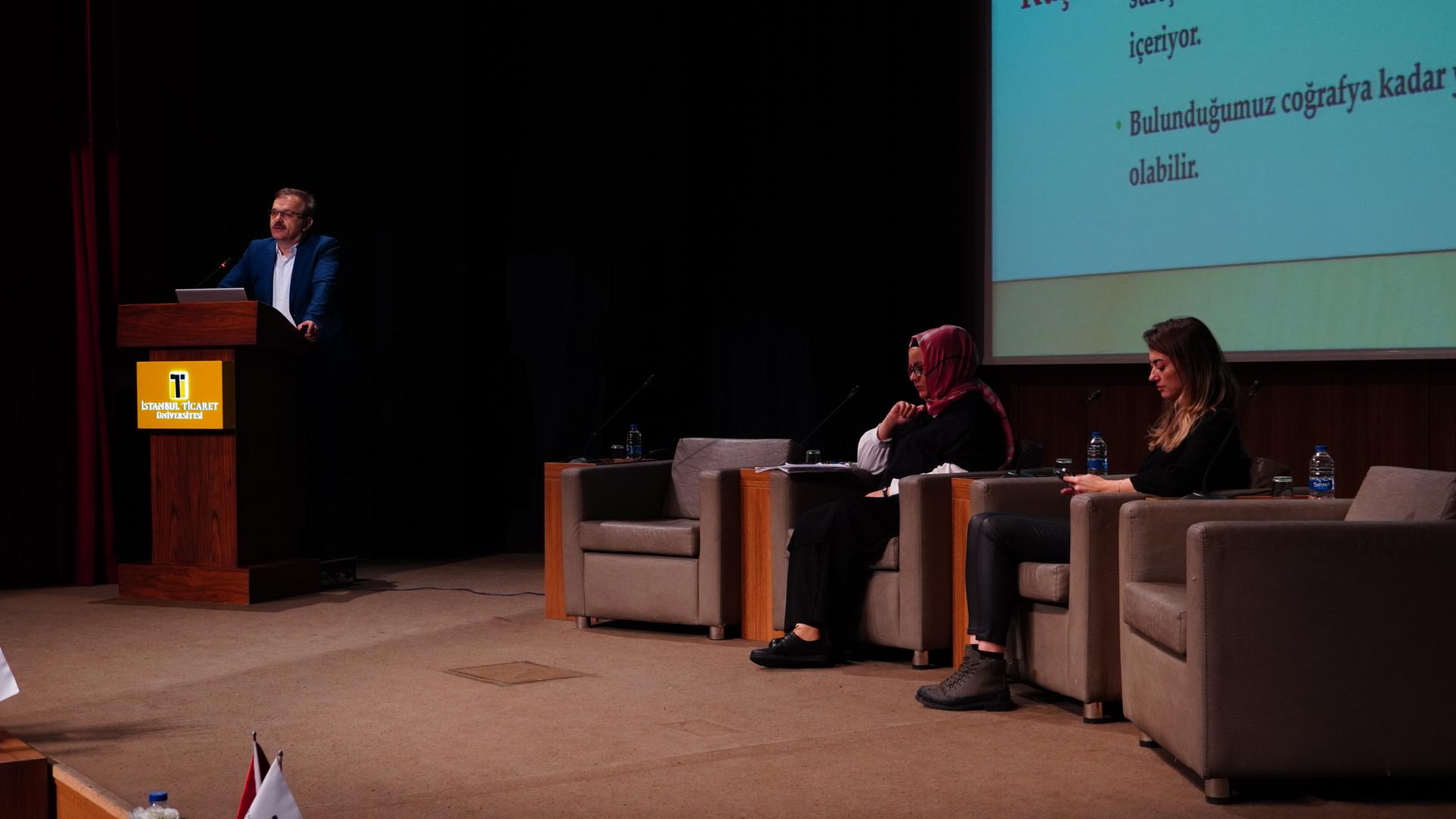
The Report, which was prepared by the Head of Psychology Department Prof. Dr. Rüstem Aşkın and academicians faculty member Dr. Ayşen Baylak Güngör and lecturers Dr. Ezgi Tan and Yasemin Kuş, was announced to the public in an introductory event attended by academicians and students.
Vice Rector Prof. Dr. Elçin Aykaç Alp made a speech at the event and thanked the team that prepared the Report, stating that such studies are important for different generations to know and understand each other and to increase intergenerational communication.
Prof. Dr. Rüstem Aşkın, who took the podium after Prof. Dr. Aykaç Alp, gave information about the Report. Prof. Dr. Aşkın explained that the objective of the Report is to understand and analyze the values, political views, self-perception and personality traits, emotions, and concerns of Generation Z, which makes up 20 percent of Turkey’s total population, as well as the conditions they are in and their approaches to social problems and their opinions and expectations in basic areas such as education and family.
HIGHLIGHTS OF THE REPORT
Of the participants, 32 (3.2%) were graduated from middle school, 651 (65.1%) from high school, 141 (14.1%) from vocational school, 150 (15%) from university/college, whereas 24 (2.4%) participants stated that they did not graduate from any school. In addition, 76.8% of the participants stated that they were living with their families.
UNEMPLOYMENT IS THE MOST IMPORTANT PROBLEM
Only 293 (29.3%) participants stated that their monthly family income was 10 thousand TL and above, while the others stated that they had lower family income. The rate of participants who stated that they personally own a computer was 71%.
When asked about the three problems they perceive as the most important, unemployment, poverty and violence and bullying were mentioned by 69.3%, 65.7%, and 64.9% of the participants, respectively. Additionally, when asked about the subjects of concern, 76.6%, 72.4% and 68.5% of the participants stated that they are concerned about country’s economic situation, their future, and career and job opportunities, respectively.
THEY ARE UNHAPPY AND ANGRY
The rates of the participants, who stated that they “regularly or frequently” experience the feeling of unhappiness and irritability were 65.8% and 73.5%, respectively.
On the other hand, a significant rate (65%) of the participants stated that their expectations are met by their parents.
THEY THINK THAT SPOUSES SHOULD BE COMPASSIONATE
The subjects that the participants attributed the most importance were having personal freedom (79.9%), living in a just and prosperous society (79.4%) and having the capacity to shape their lives (73.8%).
The participants, the female participants in particular, stated compassion/benevolence (73.8%), morality (73.1%) and altruism (61.1%) as the most important characteristics a spouse should have. On the other hand, it was observed that male participants attributed more importance to marriage and having children than the female participants.
THE DESIRE TO GO ABROAD
The rate of young people who stated that they would be willing to permanently live abroad for better education, career and job opportunities was 32%, whereas the rate of those who stated that they would be willing to temporarily live abroad for the same purposes was 31.3%. The rate of female participants was higher than male participants in both groups.
Among the participants, the number of those who expressed their political view as Kemalist (38.3%) was the highest, followed by Patrioteer (37.3%), Apolitical (30.2%), Conservative (27.8%), Environmental-Libertarian (24.5%), Islamist (21%), Nationalist (14.7%), Liberal (13.4%), and Marxist (4.6%). Contrary to popular belief, these rates seem to be comparable to the general population.
The rates of participants who stated that the COVID-19 pandemic adversely affected their psychological state, education life, and economic situation were 60%, 55%, and 50%, respectively.
CLICK HERE TO READ THE FULL REPORT (Turkish)